House Committee Chairman Targets Foreign Donations and Fraud in Campaign Finance System
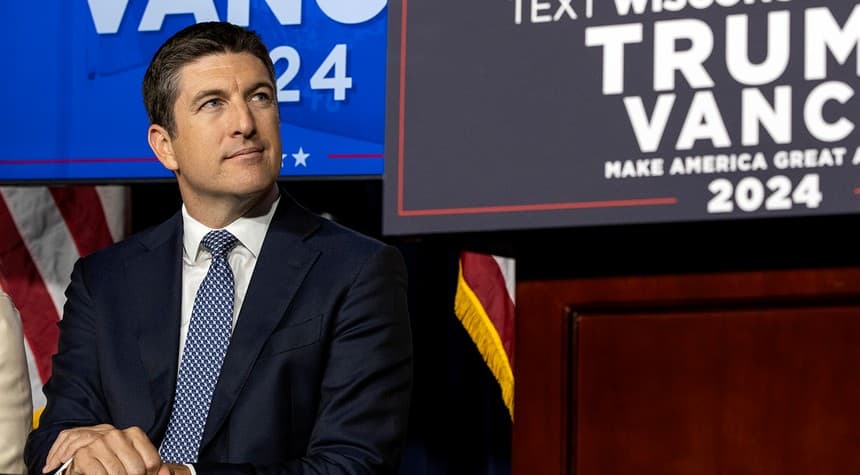
Courage, as they say, is doing the right thing even when it makes powerful people uncomfortable. And make no mistake, what House Administration Committee Chairman Bryan Steil is doing with his new legislative package takes a certain kind of courage in today's political climate.
The Wisconsin Republican introduced two bills on Monday that together aim to drag campaign finance laws into the 21st century, addressing vulnerabilities that he says bad actors have been exploiting with alarming regularity. This development comes as ActBlue, the massive Democratic payment processor, finds itself under intense scrutiny over questions about foreign donations.
The first bill, the Campaign Finance Transparency Act, would place new transparency requirements on organizations that process political donations. The second, the Preventing Foreign Influence in American Elections Act, seeks to close loopholes that allow foreign nationals to fund election-related activities through channels other than direct campaign contributions.
According to sources close to the committee, Steil plans to fast-track consideration of both measures, signaling the urgency he attaches to these reforms.
"My investigation into ActBlue has demonstrated that the current campaign finance laws were not drafted for the modern era we live in," Steil explained. "The major gaps we have uncovered are being exploited by fraudsters and foreign nationals to make illegal political donations."
The congressman painted a troubling picture of just how easy it has become to game the system. Under current law, an individual could make a fraudulent donation online using someone else's name and face virtually no risk of detection. That is not a theoretical concern. It is happening, according to Steil's investigation.
"That is an unacceptable vulnerability that bad actors are taking advantage of," he said.
The timing of this legislative push is significant. Democrats have faced increasing questions about their opposition to election integrity measures, including the SAVE Act, which would strengthen voter identification requirements. Now, with ActBlue facing allegations that it may have misled Congress about foreign donations, the pressure on Democrats to support transparency measures has intensified.
This is about more than partisan point-scoring, though politics is never far from any discussion of campaign finance. The fundamental question is whether Americans can trust that their elections are being funded by Americans, and whether the money flowing into political campaigns is coming from who it appears to be coming from.
In an era when foreign adversaries have demonstrated sophisticated capabilities to interfere in American elections, these are not academic questions. They go to the heart of democratic sovereignty.
The legislative package represents an acknowledgment that the digital revolution has outpaced the regulatory framework designed to ensure clean elections. Payment processors like ActBlue have become central players in political fundraising, moving enormous sums of money with a speed and volume that would have been unimaginable when most current campaign finance laws were written.
Whether these bills will gain traction in a divided Congress remains to be seen. But Steil has put down a marker, and the questions he is raising will not go away simply because they make some people uncomfortable.
The American people deserve to know who is funding their elections. That should not be a controversial proposition, regardless of which party benefits from the status quo.
Related: Questions Mount About Newsom’s Golden State Start Program and Political Connections