GOP Lawmakers Present Framework Targeting Housing, Healthcare and Energy Costs
Courage, as they say, is not the absence of fear but action in the face of it. And after a year of squandered opportunities and half-measures, House Republicans are finally showing signs they understand what their voters sent them to Washington to accomplish.
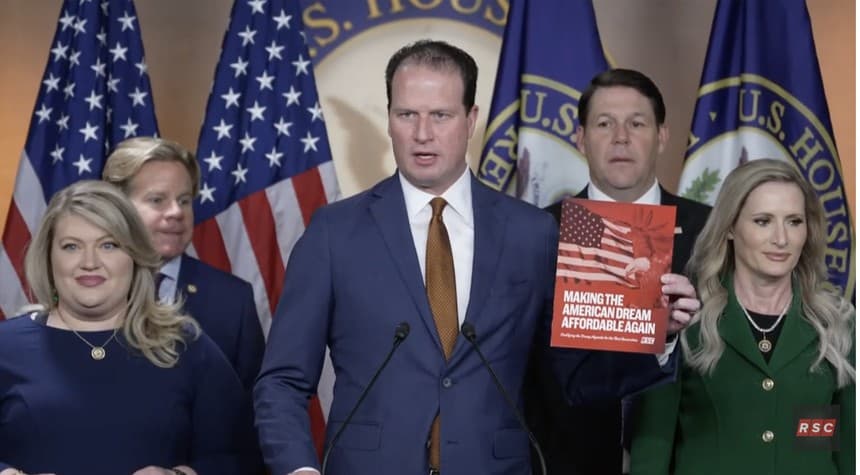
The Republican Study Committee unveiled Tuesday what they are calling their Reconciliation 2.0 Framework, a comprehensive proposal that aims to cut the federal deficit by more than one trillion dollars while tackling the kitchen table issues keeping ordinary Americans awake at night. Whether this framework represents genuine reform or just another collection of Washington promises remains to be seen, but the details deserve scrutiny.
Chairman August Pfluger of Texas laid out the stakes plainly at Tuesday's press conference. Three fundamental pillars of the American dream, he argued, are under assault: housing costs, healthcare costs, and energy costs. The framework attempts to address each with varying degrees of ambition.
On housing, Republicans propose what they call the "Don Payment" program, offering zero-to-low-down-payment mortgages through the Federal Housing Administration for borrowers with solid credit histories. The goal is straightforward enough, making homeownership accessible to creditworthy Americans being priced out of the market.
The healthcare provisions take aim at the Obamacare subsidy structure, which has been riddled with fraud and abuse. The framework would establish federal Health Freedom Accounts and codify the TrumpRx prescription drug program, measures designed to put more control in patients' hands rather than bureaucrats'.
Energy policy represents perhaps the most intriguing element of this proposal. Republicans want to slash regulations, streamline permitting processes that have become exercises in bureaucratic torture, and tap into newly available Venezuelan oil markets following the capture of socialist dictator Nicolas Maduro. The plan calls for using discounted Venezuelan oil to refill America's Strategic Petroleum Reserve, which the previous administration drained to levels not seen in four decades.
The framework also tackles the elephant in the room that too many politicians have been content to ignore: rampant welfare fraud. Treasury Secretary Scott Bessent has compared some government benefits schemes to drug cartel money laundering operations, complete with shell companies and sophisticated financial manipulation. The proposal includes reforms ensuring only American citizens are counted when federal welfare funds are allocated to states.
Blue state governments have become particularly adept at gaming the system, shifting funding streams to support their growing illegal alien populations. Under this framework, billions in transportation funds would be withheld from states and cities that issue driver's licenses to illegal aliens or otherwise undermine federal immigration enforcement.
Representative Abe Hamadeh of Arizona, a member of the Republican Study Committee leadership team, framed the proposal in stark terms. This represents a moment, he said, to restore balance and return power to the American people rather than unelected bureaucrats or foreign nationals.
The question now is whether Republicans possess the discipline and unity to transform this framework into actual legislation. They have squandered majorities before, allowing perfect to become the enemy of good or collapsing into factional infighting when decisive action was required.
The devil, as always, lurks in the details. A trillion-dollar deficit reduction sounds impressive until you examine the assumptions underlying those projections. But credit where due, Republicans are at least putting forward a vision that addresses real concerns facing American families.
Whether they have the fortitude to see it through is another matter entirely.
Related: Senate Advances Funding Package as Shutdown Deadline Looms